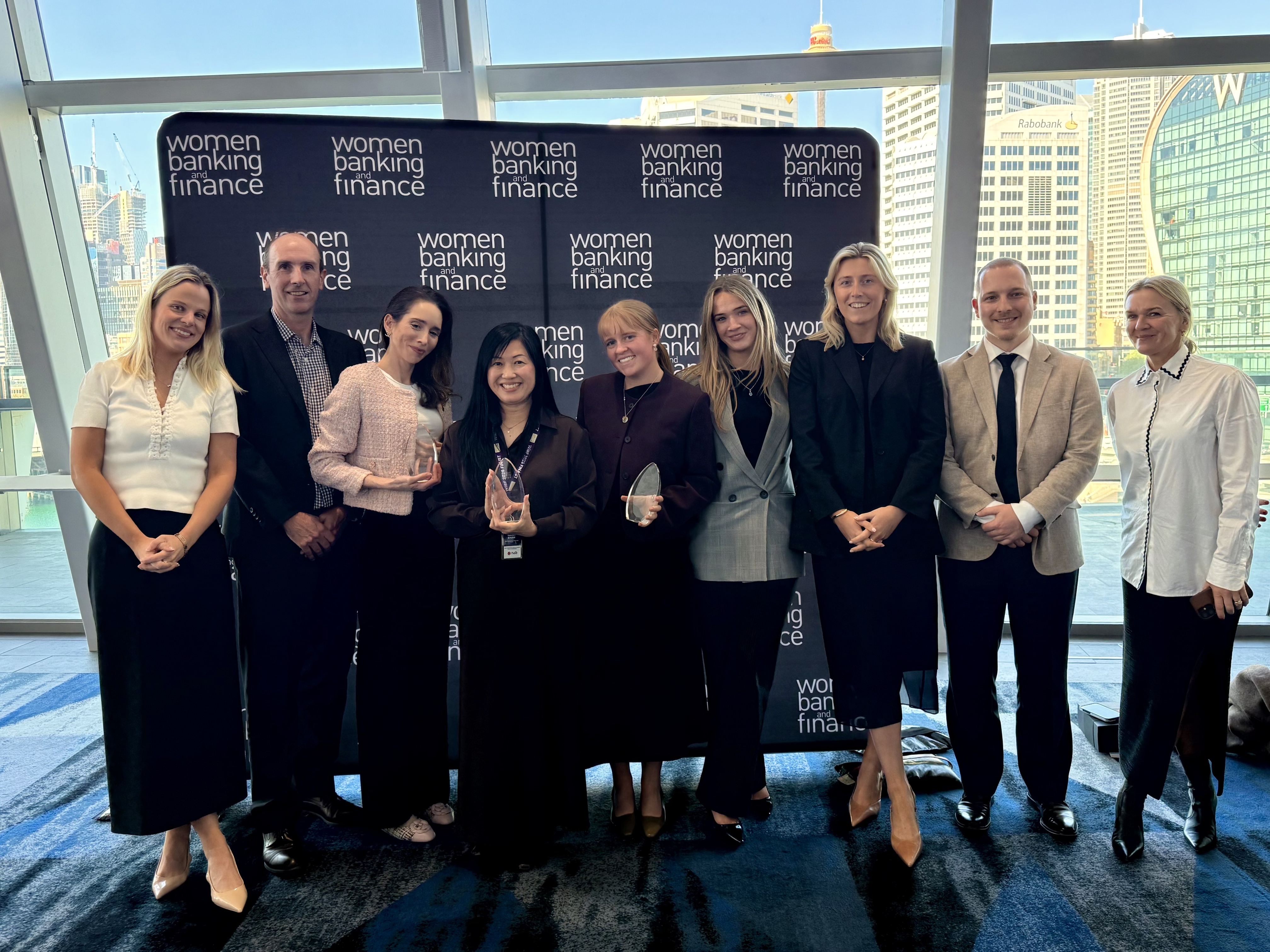
From Corporate Finance to ESG Equity Research, Zara Baxby shares her insights on the evolving role of an ESG analyst and how environmental, social, and governance factors are shaping investment decisions.
Can you tell us about your background and career pathway?
I grew up moving around internationally - mostly in Switzerland - before finishing high school in Sydney. I studied a combined Law and Commerce degree at Bond University, graduating with First Class Honours. I started my career at Jarden in the General Industrials Corporate Finance team, where I spent just under two years working across M&A, capital raisings, and advisory mandates. In June, I moved into an ESG Equity Analyst role at Jarden, a move that aligned with where I want to take my career. Jarden’s focus on professional growth and personalised development made this next step possible. I made the pivot because research offered direct client engagement, and ESG because it gave me the chance to bring together my legal background and broader interests in what I think is still a really underestimated sector.
How have you seen ESG impact your work? Can you recall instances where ESG considerations changed the course of a project?
The shift has been quite stark between my two roles, but I'd say it's more about how ESG shows up in different parts of the business. In Corporate Finance, ESG was certainly considered - it tended to come through in due diligence, disclosure requirements, and assessing deal risk. It was more about ensuring clients met baseline expectations before a transaction could move ahead.
In my current role as an ESG equity analyst, the lens is a bit different - ESG is much broader and more forward-looking in the sense that we're often trying to predict and flag where issues might not yet be a major focus for investors or the market but could materially affect valuation in the future. A good example is from a recent trip where we took clients to Western Australia, where water management and site rehabilitation costs have become defining operational issues. What might once have been seen as a peripheral sustainability concern is now a key determinant of asset viability and project success. It's no longer just a social licence issue - it's a valuation issue. Companies without robust water strategies, credible rehabilitation plans, and strong community relationships risk losing time and money, ultimately threatening project viability. On the other hand, companies with secure water rights, efficient usage, and genuine engagement with Traditional Owners hold a real competitive advantage that traditional financial metrics might miss.
Are clients and investors becoming more sophisticated with ESG, or more sceptical?
I'd say both in the sense that the ESG space has become a lot more commercial - and that's actually a really positive sign of market maturity.
On the sophistication side, investors are asking far more detailed questions than they were even a few years ago. It's not just "what are your decarbonisation targets?" anymore - they want to know how companies are deploying capital, what roadmap is, what renewable investments look like in practice, and how that affects production and returns. Investors are now asking mining companies granular questions about their water strategies - not just whether they have one, but about their specific water rights, their usage efficiency metrics, and their relationships with Traditional Owners around water access. That level of operational detail shows genuine sophistication.
On the scepticism side, there's also much healthier pushback. Investors are closely examining whether companies' sustainability commitments - like rehabilitation provisions or water strategies - genuinely stack up financially. Or is there a risk they are being underestimated and / or can create reputational and social licence risk as well.
For example, we've highlighted that closure provisions on balance sheets likely understate true costs as environmental standards evolve. Companies like Greatland inherited a $350 million closure provision from Newmont. Investors are now asking: is that adequate given how rehabilitation standards have changed? That scepticism is forcing more honest conversations about long-term liabilities.
The convergence of sophistication and scepticism is actually healthy - it's weeding out greenwashing while strengthening genuine ESG integration. The investors who are serious about ESG are more rigorous than ever, while those who weren't truly committed are being more honest about it. That bifurcation is maturing the market.
What differences have you seen in ESG considerations between banking and ESG equities?
I'd actually say the two roles are more similar than different - both are ultimately focused on understanding long-term value.
In banking, ESG was often tied to specific deal execution -understanding how an ESG issue might influence transaction risk, valuation, or investor appetite. It was about helping clients position themselves in a way that balanced those long-term considerations with the realities of getting a deal done.
In ESG research, that focus on long-term value still exists, but it's viewed through a different lens - managing the tension between short-term market pressure and sustainable value creation. My role now is about helping investors look beyond the next quarter and assess whether things like water management, rehabilitation costs, or Traditional Owner relationships could materially impact valuation over time.
So while the context has changed, the analytical goal is similar: linking ESG factors to financial outcomes. It's just that in research; you have the opportunity to explore that link in much more depth and over a longer time horizon.
Are there any particular innovations or developments in the ESG space that capture your attention?
I think one of the most interesting shifts ahead is how ESG can help counter some of the short-termism we still see in markets.
Investors are becoming more sophisticated, but there's still a tendency to focus on near-term metrics - quarterly results, dilution, or pay ratios - rather than the strategic foundations that drive long-term competitiveness. You see this tension play out in governance debates, like when investors pushed back on Xero benchmarking executive pay against global tech peers. That reaction makes sense in a local context, but it also shows how uncomfortable we can be with companies positioning themselves to compete internationally.
For me, that's where ESG has a really constructive role to play - shifting the conversation from cost and compliance to strategy and capability. If a company is being benchmarked against international standards, that's not necessarily a red flag; it can signal ambition and alignment with where the market is heading. ESG, when done well, helps investors recognise those long-term plays as positives rather than short-term risks.
At Jarden, we're also really focused on how innovation and impact intersect. On one side, we're strengthening our community partnerships -for instance, through our support for the Mawal program, which provides opportunities for First Nations emerging leaders. On the other, we're becoming increasingly AI-enabled as a firm - using new tools to analyse data more efficiently and uncover insights that weren't visible even a year ago, while doing so in a way that's data-safe, accurate, and responsible. This also lends itself to how we assess company approaches to AI and how AI can help with data availability and analysis.
How can we best prepare ourselves for this era centred around environmental sustainability and social governance?
First, understand the fundamentals. ESG isn't a shortcut around traditional finance - the best ESG professionals still know how to read a balance sheet and value a company. You're just applying those same skills through a broader lens, to capture non-financial risk and opportunities but that can be ultimately be financially material.
Second, get operational. ESG issues aren't abstract -they're about how businesses actually run. Understanding things like how a mine uses water or rehabilitates the land, how camp design affects safety culture, or how heritage constraints delay projects separates surface-level analysis from real insight.
Third, learn to distinguish disclosure from substance. Companies are increasingly sophisticated at ESG reporting. Your job is to figure out whether strategies are backed by capital, accountability, and action, or whether it's just language in a sustainability report.